
Why Membership Renewals Deserve a Data-Led Approach
Membership renewals are one of the most sensitive indicators of a club’s long-term health. When renewals slow down, the impact is felt across revenue planning, facility utilization, staffing, and future investments. For membership directors and club owners, especially those managing leisure clubs, residential communities, gymkhanas, sports clubs, and recreational facilities, renewals are not just a yearly routine. They reflect how connected members feel to the club experience throughout the year.
Even today, clubs across the country often manage renewals with manual follow-ups, basic spreadsheets, or just gut instincts. That makes it tough to spot early warning signs and slows down timely, meaningful engagement with members. The result? Renewals slip, member behavior goes unnoticed, and clubs end up scrambling at the last minute to reconnect with members who’ve already disengaged.
This is where data, analytics, and structured engagement come into play. When clubs use member analytics and CRM systems effectively, renewals become predictable, manageable, and less stressful.
Why Members Choose Not to Renew
Most members don’t just leave overnight. Churn usually builds quietly over time, and without the right insights, those early signals are easy to miss.
Common reasons for non-renewals include:
- Reduced participation in club activities and amenities
- Limited communication or irrelevant updates from the club
- Friction in booking, billing, or payment processes
- Lack of recognition for loyal or long-term members
- A general feeling that the club experience has become routine
When these issues remain invisible, clubs react too late. By the time the renewal reminder is sent, the member may already have made up their mind.
The Role of Analytics in Renewal Planning
Analytics helps clubs move from reactive renewal drives to planned retention strategies. Instead of treating all members the same, clubs can analyze behavior patterns and engagement levels at an individual and group level.
With the right analytics framework, clubs can:
- Track visit frequency across facilities and time periods
- Understand which amenities drive the most engagement
- Identify members whose activity levels are declining
- Monitor payment behavior and renewal timelines
- Compare engagement trends across membership categories
This data creates clarity. Membership teams no longer rely on assumptions. They work with facts that show who needs attention, when, and why.
Turning Member Data into Meaningful Engagement
Data alone does not reduce churn. What matters is how clubs act on insights. This is where CRM plays a central role.
A well-structured CRM helps clubs organize member profiles, communication history, preferences, and interactions in one place. When combined with analytics, CRM enables focused and timely engagement.
Effective engagement strategies include:
- Sending renewal reminders aligned with member usage patterns
- Offering relevant activity or facility suggestions based on past behavior
- Sharing personalized updates instead of generic announcements
- Recognizing milestones such as long-term membership or frequent participation
- Following up proactively with members showing reduced engagement
These actions create a sense of connection. Members feel seen and valued, which strengthens loyalty over time.
Building a Predictable Renewal Cycle
For many clubs, renewals feel uncertain because there is no structured process behind them. Analytics-driven renewal planning introduces consistency.
A predictable renewal cycle typically includes:
- Early identification of at-risk members using activity and engagement data
- Scheduled communication plans based on membership type and behavior
- Clear visibility into upcoming renewals and pending payments
- Reports that show renewal trends across months and years
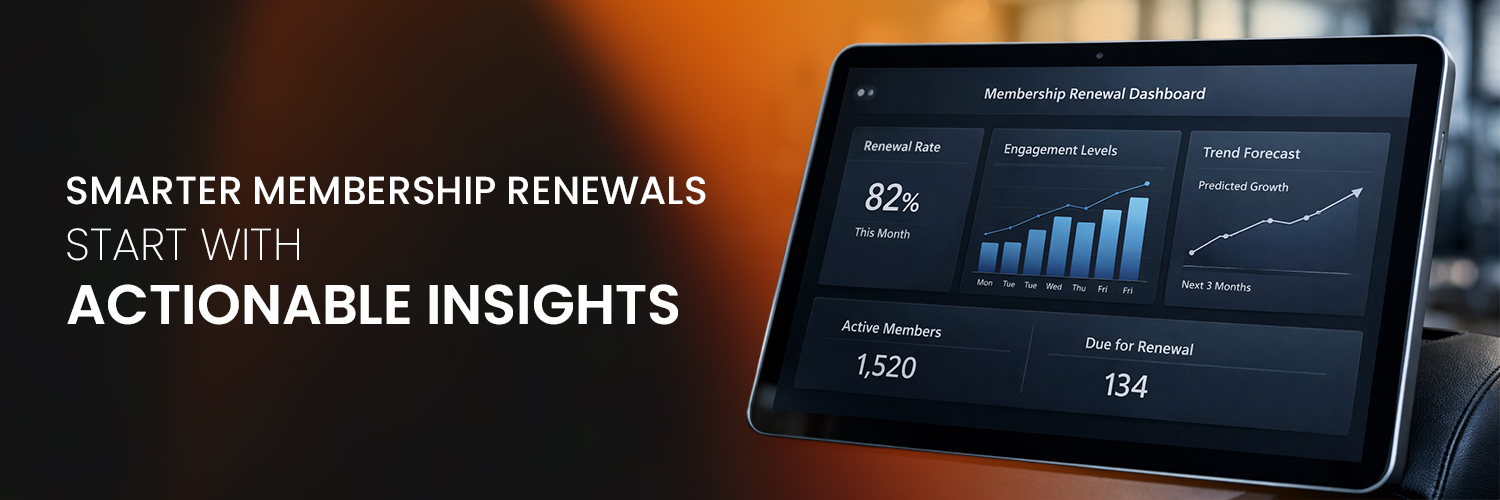
- Internal dashboards for membership teams to track progress
When renewals are managed this way, surprises are reduced. Teams have time to engage, resolve issues, and improve the member experience before renewal deadlines arrive.
Measuring What Matters for Long-Term Retention
Retention improves when clubs focus on the right metrics. Beyond renewal counts, analytics helps track indicators that influence future decisions.
Key metrics to monitor include:
- Member activity frequency and consistency
- Amenity usage by membership category
- Engagement with events and programs
- Renewal rate trends over time
- Communication response rates
These insights support better planning, smarter investments, and more meaningful engagement strategies.
Making Renewals a Continuous Process
Membership renewals should not feel like a last-minute campaign. They work best as a continuous process that runs throughout the year. When clubs listen to data, engage members consistently, and address issues early, renewals become a natural outcome of a positive experience.
By using analytics and CRM together, clubs gain visibility, control, and confidence. They reduce churn not through pressure or discounts, but through understanding and relevance. For modern clubs aiming to grow sustainably, this approach turns renewals from a challenge into a strength.
How eCube Supports Smarter Retention Strategies
eCube is designed to support clubs that want clarity and control over their membership lifecycle. Its member analytics and CRM capabilities bring operational data and engagement insights together on a single platform.
For leisure clubs, residential communities, gymkhanas, sports clubs, and recreational facilities, eCube enables:
- Centralized member profiles with activity and payment history
- Analytics dashboards that highlight usage patterns and trends
- CRM tools to manage communication and engagement consistently
- Automated reports to track renewals, drop-offs, and participation
- A unified view of members across amenities, events, and services
This integrated approach helps clubs understand what drives member satisfaction and where improvements are needed. Instead of relying on fragmented systems, teams work with one connected view of the member journey.
FAQs
1. Why do clubs struggle with membership renewals?
Many clubs lack visibility into member behavior and engagement. Without clear data, it becomes difficult to identify early signs of disengagement and take action before renewal time.
2. How can analytics help reduce membership churn?
Analytics helps clubs track member activity, facility usage, and engagement trends. These insights allow membership teams to identify at-risk members early and engage them in a timely manner.
3. What role does CRM play in improving renewals?
CRM centralizes member profiles, communication history, and preferences. When combined with analytics, it enables personalized outreach and consistent engagement throughout the membership lifecycle.
4. Which types of clubs benefit most from analytics-driven renewals?
Leisure clubs, residential communities, gymkhanas, sports clubs, and recreational facilities benefit significantly as they manage diverse member activities and amenities.
5. How early should clubs start planning for renewals?
Renewal planning should begin months in advance. Tracking engagement patterns throughout the year helps clubs address issues early and avoid last-minute retention efforts.
6. What member data is most useful for renewal planning?
Key data includes visit frequency, amenity usage, event participation, payment behavior, and communication response trends.
7. Can analytics improve both retention and revenue?
Yes. Better retention leads to predictable revenue, improved facility utilization, and more informed decisions about programs, staffing, and investments.
8. How does eCube support membership renewal strategies?
eCube provides integrated member analytics and CRM tools that give clubs a unified view of member activity, engagement, and renewal status, enabling smarter and more consistent retention efforts.