
Why Club Leadership Is Moving Beyond Basic Reporting
Leisure clubs, residential communities, gymkhanas, sports clubs, and recreational facilities generate data every single day. Bookings, member visits, restaurant bills, payments, event participation, inventory usage, overdue dues, and facility demand all create a steady flow of information. For many clubs, the challenge is not the lack of data. The challenge is knowing how to use it well.
Leading club owners and finance heads are treating analytics as a core part of management. They are no longer satisfied with reports that only summarize the past. They want a clearer view of what is changing inside the club, where revenue is growing, where cost pressure is rising, and where member behavior is shifting. They want insight that supports action.
This shift matters because club operations have become more interconnected, where a spike in amenity bookings affects staffing, lower restaurant demand impacts inventory planning, and delayed collections disrupt cash flow, while changes in member activity influence renewals, package demand, and overall engagement levels. When each department is reviewed in isolation, leadership sees only a partial picture, but when data is connected, club management becomes far more precise.
That is why analytics has become a leadership tool rather than a back-office function. A modern club needs visibility across operations, finance, and member activity to make better decisions at the right time. eCube's design reflects this need through a fully integrated BI dashboard, reporting capabilities, and connected club management modules that improve operational visibility and support better planning.
What Club Leaders Are Doing Differently in 2026
Club leaders are changing how they use information in three important ways.
1. They are looking at the whole club, not one department at a time
Owners and finance leaders want to understand how the club performs as one business. They are reviewing membership, booking trends, food and beverage performance, collections, accounting, and facility usage together. This helps them see the relationship between demand, service delivery, and financial results.
For example, a rise in member visits may look positive on its own. But if restaurant margins are falling at the same time, or if peak-hour usage is putting pressure on staffing and inventory, the real picture is more complex. Integrated analytics helps leadership respond with balance rather than guesswork.
2. They are paying attention to patterns, not just numbers
A monthly total tells you what happened. A pattern helps show where things may be headed.
Club leaders are asking questions such as:
- Which amenities are busiest on which days and at what times?
- Which member segments are becoming less active over time?
- Which services drive repeat engagement and stronger spend?
- Are there seasonal trends that affect banquet bookings, room reservations, or restaurant traffic?
- Which cost lines rise before peak periods?
These questions lead to better decisions because they connect numbers with behavior. They help management move from reaction to planning.
3. They are using analytics to make everyday decisions faster
Analytics is no longer reserved for annual reviews or long finance meetings. In well-run clubs, it supports daily and weekly decisions. Teams use it to adjust resource allocation, monitor performance, plan promotions, review collections, and identify early issues before they become bigger problems.
This is especially valuable in clubs where multiple functions run at the same time across membership, events, dining, front desk, accounting, and facilities. eCube is built around this connected model, with modules spanning membership and CRM management, amenities, events, accounting, front desk, restaurant management, POS, online payments, and reports within one environment.
Why Predictive Insight Matters in Club Management
Predictive insight does not always require a highly complex model. In club operations, it often begins with spotting signals early.
A good BI setup can help clubs:
- Forecast busy periods for amenities, events, and dining
- Identify revenue trends by service line or facility
- Monitor collection patterns and outstanding dues
- Track member usage changes before retention drops
- Improve inventory planning and reduce waste
- Study demand by day, season, or member category
This gives owners and finance teams more control. Instead of waiting for month-end surprises, they can see operational pressure building earlier and take action sooner.
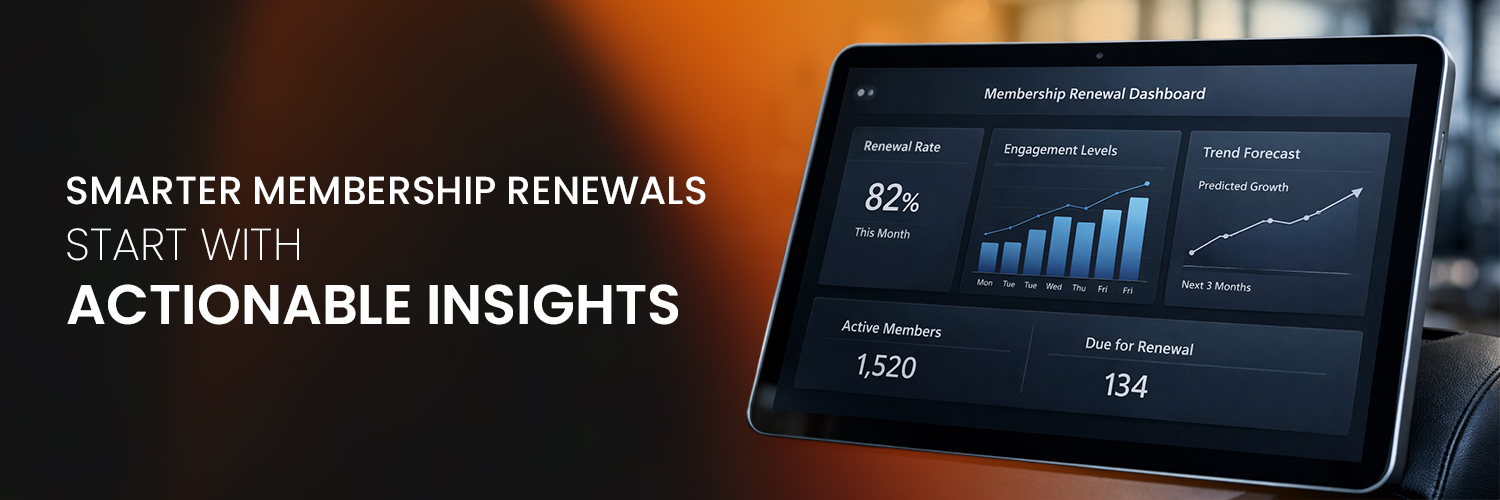
eCube's BI positioning supports this approach. Its business intelligence dashboard is designed to provide KPI snapshots, visual analysis, drill-down capability, and ongoing reports that help management track emerging trends, analyze member behavior, and review operations with greater clarity.
The Business Value of Integrated Analytics
The biggest value of analytics comes when information is connected. If bookings sit in one system, billing in another, and member activity in a separate report, decision-making slows down. Leadership spends too much time collecting information and too little time acting on it.
An integrated environment changes that. It allows club management to review performance with more confidence and less manual effort. It also improves visibility across the full member and operations journey.
For leisure clubs, residential communities, gymkhanas, sports clubs, and recreational facilities, this can help answer practical business questions such as:
- Which services are performing well and which need attention?
- Where is revenue growing and where is it becoming inconsistent?
- Which member groups are highly engaged and which are drifting away?
- Where are costs rising without a matching increase in value?
- How can the club plan staffing, inventory, and resources with more accuracy?
This kind of visibility is becoming a competitive advantage. Clubs that use analytics well are better placed to improve service, control cost, and plan growth with discipline.
How eCube Helps Club Leaders Turn Analytics Into Action
This is where eCube fits naturally into the modern club leadership model. Because it brings together membership management, bookings, POS, accounting, front desk operations, inventory, payments, and reporting within one connected system, club leaders do not have to depend on scattered data or delayed updates to understand performance. They can view key business indicators in one place, study trends across departments, and drill down into specific areas that need attention.
For club owners and finance teams, this makes analytics more practical and more useful in daily decision-making. Instead of reviewing numbers after issues grow, they can spot shifts in member activity, revenue flow, collections, facility usage, and operational efficiency early enough to respond with confidence.
eCube supports the exact shift that club leaders are making: moving from basic reporting to connected, timely, and decision-ready insight that helps clubs plan better, control costs, improve service delivery, and run with greater clarity.
A Smarter Way Forward for 2026 Clubs
The clubs that are leading in 2026 are not simply collecting more data. They are using analytics to ask better questions, spot trends earlier, and make decisions with greater confidence.
For club owners, this means stronger control over performance. For finance leaders, it means better forecasting, clearer revenue visibility, and fewer blind spots across operations. For the club as a whole, it means running with more alignment across departments.
That is where business intelligence makes a real difference. When analytics is built into club management rather than treated as an afterthought, leadership gains a practical view of what is happening now and what needs attention next. With an integrated BI-led approach, clubs can manage growth, improve member experience, and strengthen day-to-day decision-making with more clarity.
FAQs
1. What is analytics in club management software?
Analytics in club management software refers to the use of club data to measure performance, track trends, and support better decisions. It helps leisure clubs, residential communities, gymkhanas, sports clubs, and recreational facilities monitor bookings, revenue, member activity, dues, dining performance, and facility usage from one connected view.
2. Why is analytics in club management important for owners and finance leaders?
Analytics in club management is important because it helps owners and finance leaders understand how the club is performing across revenue, cost, collections, and operations. It supports better forecasting, tighter financial control, and faster decision-making by showing where performance is improving and where attention is needed.
3. What metrics should leaders track with club management analytics?
Leaders should track key club management analytics such as membership growth, renewals, booking volumes, amenity usage, restaurant and POS sales, overdue dues, collections, inventory movement, and departmental revenue. Reviewing these metrics together gives a more complete view of club performance.
4. How can business intelligence in club management help improve member experience?
Business intelligence in club management can help improve member experience by showing which facilities are most used, when demand is highest, and where service gaps may exist. This helps clubs plan resources better, improve availability, and create a smoother experience for members.
5. How does analytics in leisure club management support cost control?
Analytics in leisure club management supports cost control by helping leadership track spending patterns, inventory usage, manpower planning, and payment recovery. It can highlight waste, rising cost areas, and inefficiencies early, which helps finance and operations teams take corrective action sooner.
6. Which clubs can benefit from club management software with analytics?
Club management software with analytics can benefit leisure clubs, residential communities, gymkhanas, sports clubs, and recreational facilities. Any club that wants stronger control over operations, better financial visibility, and a clearer understanding of member activity can benefit from an analytics-led approach.
7. What are the benefits of BI dashboards in club management software?
BI dashboards in club management software help leaders view KPIs in one place, track trends across departments, and drill down into important details. The benefits include faster reporting, better planning, improved operational visibility, stronger cost control, and better support for leadership decisions.
8. How can analytics help increase revenue in club management?
Analytics can help increase revenue in club management by identifying high-performing services, member usage trends, booking demand patterns, and opportunities to improve collections or promote relevant offerings. This gives club leaders a better basis for pricing, planning, and service improvement.